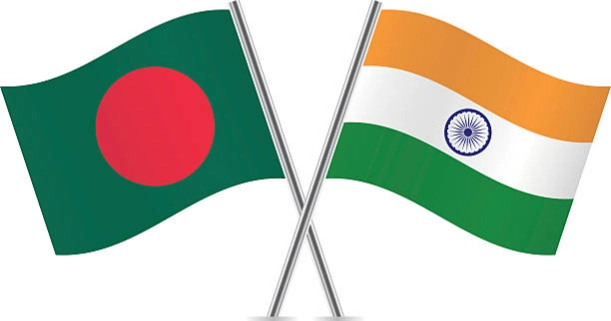
Dhaka: Noting that Bangladesh and India share 54 common rivers, India has said all water-related cooperation and discussions between the two countries should take place through their existing bilateral mechanisms, including the Joint Rivers Commission (JRC), as well as other structured dialogue mechanisms already in place.
“There are several rivers which are shared between Bangladesh and India. In fact, to pinpoint the number, 54 rivers are shared between the two countries. And all water-related collaboration or discussions that have to happen between the two countries have to be done through the bilateral Joint Rivers Mechanism or Joint Rivers Commission that we have with Bangladesh, along with the structured dialogue mechanisms that are in place,” Randhir Jaiswal, spokesperson for India’s Ministry of External Affairs, told reporters on Tuesday evening.
He made the remarks when a journalist drew his attention to Bangladesh’s efforts to explore Chinese investment in the Teesta project.
Water Resources Minister Shahiduddin Chowdhury Anee has recently said Bangladesh does not want its friendly relations with neighbouring India to deteriorate over the long-pending Teesta water-sharing treaty, and urged Delhi to take Dhaka’s interests into account while pursuing its own.
“The neighbouring country is a friendly country. They have to think that while they have their interests, we also have ours. A friend should protect the interests of a friend. They will pay attention to our interests. We never want our friendly relations with them to deteriorate,” he said.
Asked about a recent report by the UN Security Council’s (UNSC) monitoring team on jihadist terror groups that mentioned Bangladesh, Jaiswal said terrorism and security should be a shared concern.
“See, terrorism and security matters are something that should concern everybody because it is a common scourge for all of us. We want to together fight this problem,” he said.
“You saw the report of the monitoring committee which came out recently. They specifically mentioned people who were behind the group that was behind the Red Fort terror attack as well,” Jaiswal said.
The report in question is the 38th of a UNSC committee that monitors the activities of Islamic State in Iraq and the Levant (Da’esh), Al-Qaida and associated individuals, groups, undertakings and entities. The Monitoring Team to the committee every six months. The latest report, submitted on August 10, covers the period from December 16, 2025 to June 9, 2026.
It runs to 30 pages, and contains 138 paragraphs. Bangladesh is mentioned just once, on page 18, in Paragraph 101, which states:
“Al-Qaida in the Indian Subcontinent (AQIS, not listed) continued to evolve from a fragmented group into a regional terrorist entity; it established logistics and financial networks, working in decentralized small, scattered cells instead of large units. The attack in November 2025 on the Red Fort in Delhi was officially attributed to AQIS. There was some concern about AQIS trying to exploit Bangladesh to establish cells there.”
State Minister for Foreign Affairs Shama Obaed Islam tried to blame Awami League propaganda for it, pointing to possible links with supporters of deposed Prime Minister Sheikh Hasina.
“It could be … because I think I told you the other day that fascist government (the previous Awami League government) could very well have done this, and it could also be their propaganda. So we have to look into it. I and the Ministry of Foreign Affairs do not have any data on which I can comment. Of course, the Home Ministry is looking into it,” she told reporters at the Ministry of Foreign Affairs on Tuesday, in response to a question.
Responding to another question, she also said Foreign Minister Dr Khalilur Rahman, who is set to assume the presidency of the UN General Assembly next month, would “definitely” raise the matter with the relevant UN authorities.
“I will agree with the Home Minister that we do not have any specific data so far. There are no facts and data on which I can talk about this,” she said.
There is no further substantiation of the ‘concern’ in the report either.
Bangladesh-India Ties
The Indian MEA spokesperson said India wants “positive, constructive and forward-looking” relations with Bangladesh based on mutual interest and reciprocity.
“Our position on the press conference by the former Prime Minister needs no repetition. On the issue of extraditions, our consistent position has been, and you’re well aware of that, that these requests are being examined as part of our established processes,” he said.
On energy cooperation with Bangladesh, Jaiswal said it remains ongoing in accordance with existing contracts and agreements. He also added that any further requests for additional supplies must go through a well-established process of scrutiny, as India must meet its own needs first.
“As far as the additional request is concerned, we are examining this given our own requirements, given our refining capacity, as also the availability that is there on our side,” he said.
Neither Bangladesh nor India could provide an update on a possible visit by Prime Minister Tarique Rahman to India.
“I do not have any update on the Prime Minister’s visit. When the Prime Minister’s visit to a country is decided, you will know from the Prime Minister’s Office,” Shama Obaed said.
Jaiswal too said he had no update on the matter. “When I have an update, I will surely share with you,” he said.