International desk: Iran says the US must lift its naval blockade and meet Tehran’s demands to advance peace talks and restore security in the Strait of Hormuz.
Iran has accused the United States of undermining diplomatic efforts to end the conflict, saying Washington must lift its naval blockade and meet Tehran’s demands before negotiations can advance and security can be restored in the Strait of Hormuz.
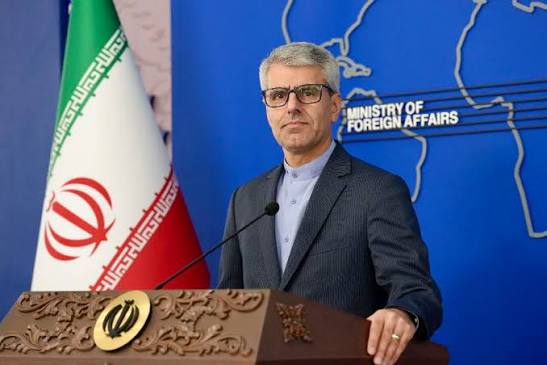
Foreign Ministry spokesperson Esmaeil Baghaei said on Monday that the US had “not only failed to offer any diplomatic initiatives but has actively undermined diplomatic processes” over the past two years.
“The ball is now in the US’s court and Iran’s demands are entirely clear and logical,” Baghaei told reporters, adding that Tehran would assess the prospects for an agreement based on Washington’s actions rather than its statements.
He warned that no agreement would be reached and the Strait o…
Baghaei said Iran’s existing seven-stage proposal remained the basis for indirect negotiations but had been condensed into a plan that could be implemented within two days.
He described the shorter timeline as a demonstration of Tehran’s goodwill and willingness to pursue diplomacy, while stressing that the next steps depended on Washington’s response.
“If Iran’s demands are met, it is possible that both security will be restored to the Strait of Hormuz and the negotiation process will begin within a short period of time,” he said.
The proposal had been discussed during an Iranian delegation’s visit to New York, after which Tehran received Washington’s views through mediators, Baghaei said. He added that the exchange of messages between the two sides was continuing.
Qatar facilitates exchanges between Tehran and Washington
Baghaei confirmed that Iranian Deputy Foreign Minister Kazem Gharibabadi had visited Doha to facilitate the exchange of messages between Tehran and Washington through Qatari mediation.
Asked about a recent letter from the US, Baghaei said the secretary of Iran’s Supreme National Security Council would decide how to respond, taking the country’s national interests into account.
He stressed that the letter had not initiated a new diplomatic process and that Iran’s existing proposal remained the framework for indirect talks.
Parliament Speaker Mohammad Bagher Qalibaf was leading the latest negotiations, while the Supreme National Security Council continued to oversee the broader diplomatic process, Baghaei said.
The spokesperson also expressed caution about renewed diplomatic efforts, citing the breakdown of the previous negotiations in Islamabad and recent remarks by US President Donald Trump dismissing those talks as a waste of time.
Iran says it has no hostility towards Gulf neighbours
Baghaei said Tehran had no hostility towards neighbouring Gulf countries and supported regional cooperation to establish lasting security.
However, he warned that Iran would not remain silent if the territory of regional states was used to threaten its national sovereignty or the security of its people.
He criticised some Gulf countries for placing excessive trust in the US military presence and, in certain cases, actively cooperating with Washington.
“Building trust is a two-way process, and Iran’s reasonable expectation is that regional countries should not allow their territory or facilities to be exploited against a major neighbour,” he said.
Source: International News Agencies