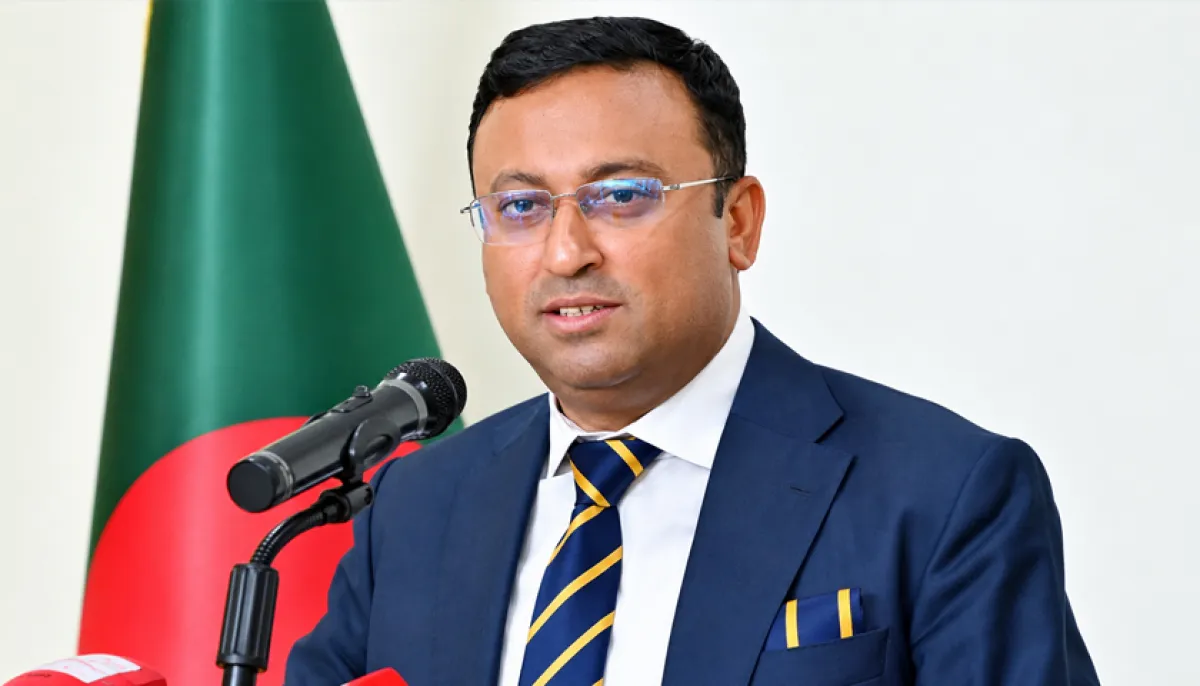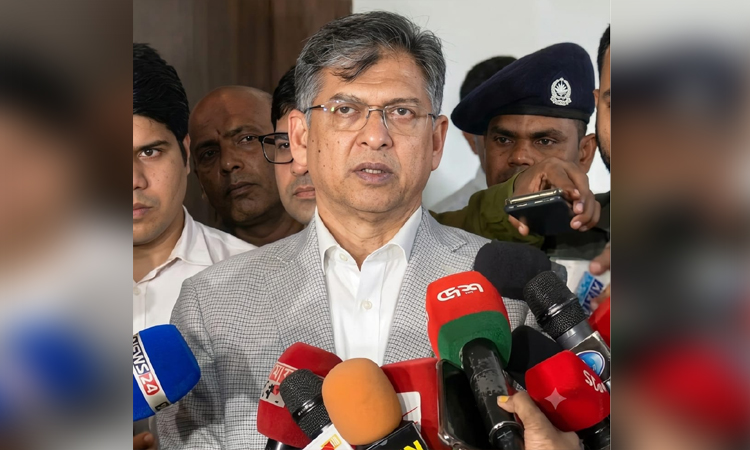
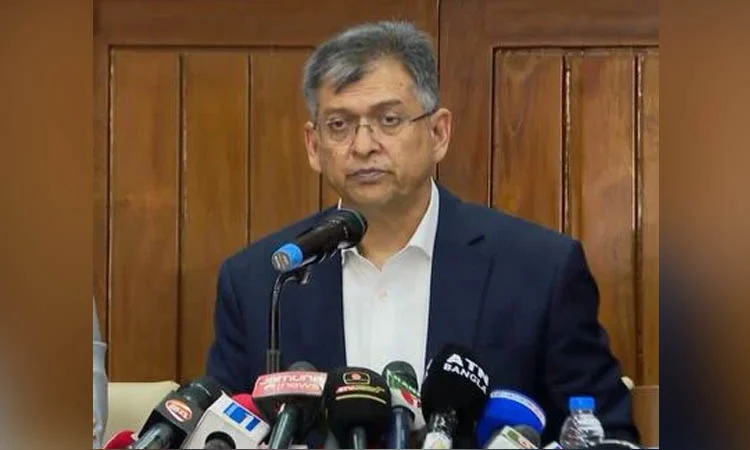
Dhaka: The special committee on constitutional amendments wants to move swiftly to implement the July National Charter exactly as it was signed, said committee chairman and home minister Salahuddin Ahmed.
He said discussions with political parties and people from different professions and sections of society will be held for completing the process by December next before submitting its report to the Jatiya Sangsad.
Salaudding said this at a briefing with journalists at the Media Centre of the Jatiya Sangsad after the committee’s second meeting on Sunday.
He said efforts would be made to hold at least one meeting every week to expedite the committee’s work.
“The July National Charter will be implemented exactly as it was signed. For this purpose, views will be sought from the concerned political parties, constitutional experts, former judges and justices, lawyers, teachers, journalists, July fighters, representatives of the Anti-Discrimination Student Movement, members of families of martyrs and people from different professions and sections of the society,” he said.
After stock taking from all concerned parties, he said, necessary recommendations for implementing the July National Charter would be prepared and submitted to the Jatiya Sangsad.
He said work on preparing the report has already begun. The report could be placed before parliament as soon as the discussions are completed. The committee’s target is to conclude the discussion by December next.
Salahuddin Ahmed said 26 political parties those had signed the July National Charter were invited for an exchange of views. Of them, 15 parties sent representatives directly. Several parties sent more than two representatives, he added.
He said one party submitted a written statement, while representatives of another party could not attend at the last moment due to illness and family reasons. In all, representatives of around 17 political parties participated in the process, he added.
The committee chairman identified the AB Party as the party that submitted a written statement and said representatives of the Jatiya Ganofront were absent due to illness.
He said the committee’s door would always remain open if parties that did not sign the July National Charter also wished to participate in the discussions. Proposals submitted in written by either any registered or unregistered political parties would also be considered, he added.
Responding to a query about the participation of political parties in the meeting, Salahuddin Ahmed said the committee has no intention of moving forward by keeping any particular party or group out of the process.
He said those who participated in today’s discussions have presented their views and proposals. Those who have not yet attended would also have the opportunity to submit written proposals. If necessary, the committee would formally invite them for dialogue again.
The Home Minister said the July National Charter itself separately identifies the issues that can be implemented through constitutional amendments. It also separately mentioned the issues those can be implemented through various laws, ordinances, rules and executive orders, he added.
Salahuddin Ahmed said the political parties are committed to implement the issues on which they have reached consensus. Issues on which any party has a “note of dissent” would also be kept under consideration along with the respective dissenting views, he added.
He said the special committee would also consider some constitutional proposals contained in election manifestos beyond the July National Charter.
He said work is underway on a proposal to change the fiscal year to cope with Bangladesh’s seasonal cycle. He noted that such a change might require an amendment to the relevant provision of the Constitution.
Regarding the formation of an upper house of parliament, Salahuddin Ahmed said there are differences among political parties on some issues. While there is a consensus that the upper house would be consisted of 100 members, differences remained over the method of selecting or electing its members.
Some has proposed forming the upper house in proportion to the seats won in the parliament, while others had proposed using the proportional share of votes, he noted.
He said if any political party makes its position clear on such issues in its election manifesto and receives a mandate from the people, there would be an opportunity to take measures accordingly later.
Referring to what he described as misleading propaganda surrounding the BNP over implementation of the July National Charter, Salahuddin Ahmed said BNP had pledged to implement the July National Charter exactly as it was signed. Work was underway to bring the necessary constitutional amendments to parliament at the earliest possible time, he added.
He said that after the special committee prepares its report, the Law Ministry would bring a constitutional amendment bill to parliament on the basis of the report. An effort would then be made to pass the bill through extensive discussion and debate in parliament on the basis of consensus, he added.
He said the Constitution is a living state document. Constitutions in different countries have been amended at different times in line with societal needs and the demands of the people. Therefore, it is not possible to permanently determine everything for future generations, he added.
Asked whether a constitutional amendment adopted through parliament could face a legal challenge in the future, Salahuddin Ahmed said a constitutional amendment adopted through the parliamentary process and the drafting of a new constitution are not the same matter.