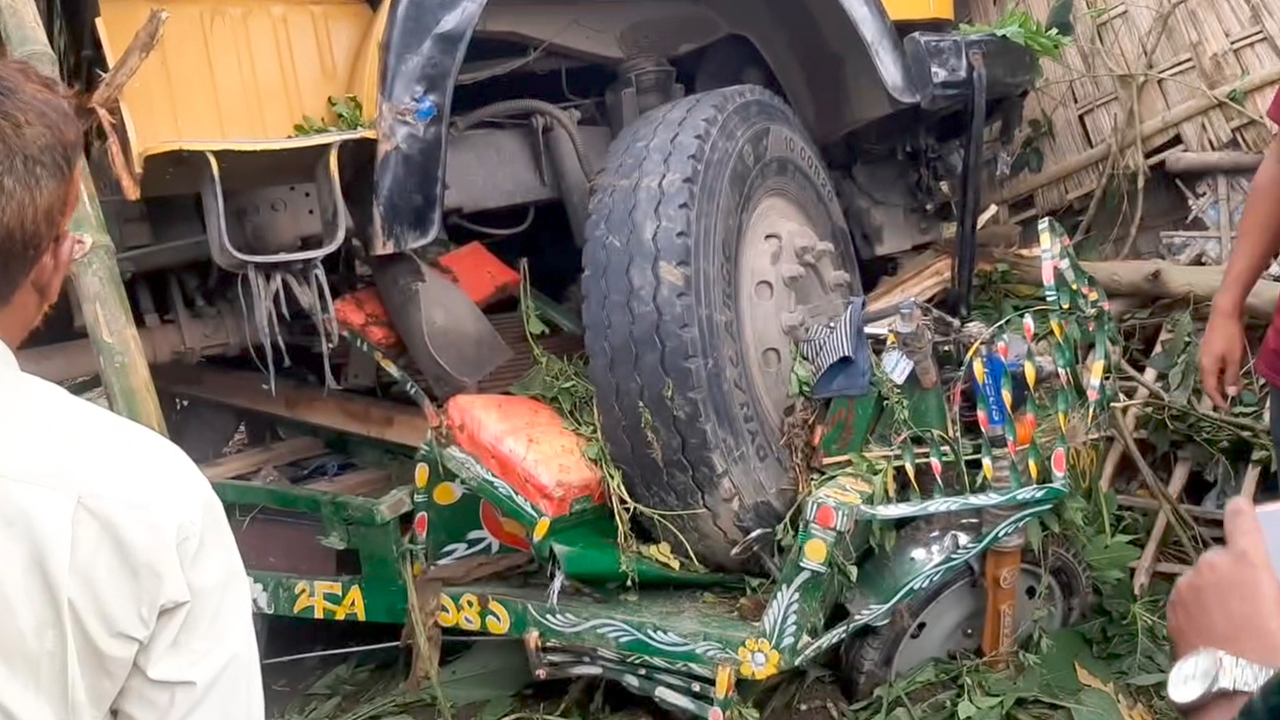
Desk report: Four people, including three members of the same family, were killed after a truck rammed over a passenger van from behind in northern Bangladesh’s Nilphamari district on Sunday afternoon.
The fatal accident occurred in the Motokpur Nodirpar area of Domar upazila. According to police, the truck struck a passenger-carrying Mithila van from the rear, leaving four people dead on the spot. Among the victims were three members of the same family, while the fourth was the van driver.
Confirming the incident, Domar Police Station Officer-in-Charge (OC) Habibullah said four people had been killed in the crash. Police were dispatched to the scene immediately, and further details regarding the identities of the victims and the circumstances surrounding the accident were being collected.
The latest tragedy adds to Bangladesh’s growing road safety crisis, where fatal crashes involving trucks, buses and motorcycles continue to claim hundreds of lives every month. Road safety experts have repeatedly blamed reckless driving, speeding, unsafe overtaking, poor enforcement of traffic laws and inadequate highway management for the persistently high death toll.
According to the Road Safety Foundation (RSF), at least 438 people were killed and 561 injured in 472 road accidents across Bangladesh in June alone, with motorcycle crashes accounting for nearly one-third of all fatalities. Pedestrians also remained among the most vulnerable road users.
Earlier this year, the Bangladesh Jatri Kalyan Samity reported that 402 people were killed and 1,294 injured in 394 road accidents during the 15-day Eid-ul-Azha travel period, highlighting the heightened risks associated with holiday travel and continued weaknesses in road safety enforcement.
Authorities have launched an investigation into Sunday’s crash, while local residents have once again called for stricter enforcement of traffic regulations and tougher measures against reckless driving to prevent further loss of life.