International Desk: Israeli Prime Minister Benjamin Netanyahu made a secret weekend trip to the United Arab Emirates to meet President Sheikh Mohamed bin Zayed Al Nahyan, with the talks reportedly focusing on claims that the Emirati leader had warned Netanyahu of a possible Hamas attack before the Oct. 7, 2023, assault on southern Israel.
Two people briefed on the visit confirmed Monday that Netanyahu and Sheikh Mohamed met for about an hour on Sunday. The meeting was first reported by Israel’s Channel 12 television, reports AP.
One of the sources said Netanyahu asked Sheikh Mohamed to reject a recent report by the Israeli newspaper Haaretz alleging that the Emirati leader had cautioned him about an impending Hamas attack shortly before Oct. 7, 2023.
A source with firsthand knowledge of the meeting and a regional official briefed on the talks spoke on condition of anonymity because the visit was not publicly announced. Netanyahu’s office had previously denied the Haaretz report and did not immediately comment on the meeting.
Israel’s Shin Bet security service filed a complaint with the country’s chief military censor against Channel 12, accusing it of a serious breach of censorship rules. The agency said the report’s timing endangered the prime minister, military personnel and operations.
The UAE Foreign Ministry declined to comment on the reports but said it maintains “open and direct lines of communication” with Israel and shares relevant intelligence.
The UAE’s state-run WAM news agency later confirmed Netanyahu’s visit, saying the two leaders discussed bilateral relations and ways to strengthen cooperation between the two countries.
Meanwhile, EU foreign policy chief Kaja Kallas said Monday that the European Union is seeking observer status in a Saudi-led maritime security coalition aimed at protecting the kingdom’s energy exports.
Kallas said the EU also wants to expand its naval mission in the Red Sea, known as ASPIDES, to help escort commercial vessels through the Bab el-Mandeb Strait and protect shipping from attacks by Yemen’s Iran-backed Houthi rebels.
She said the need for additional ships “is bigger than it’s ever been,” as the EU faces pressure over energy supplies amid the war in Iran.
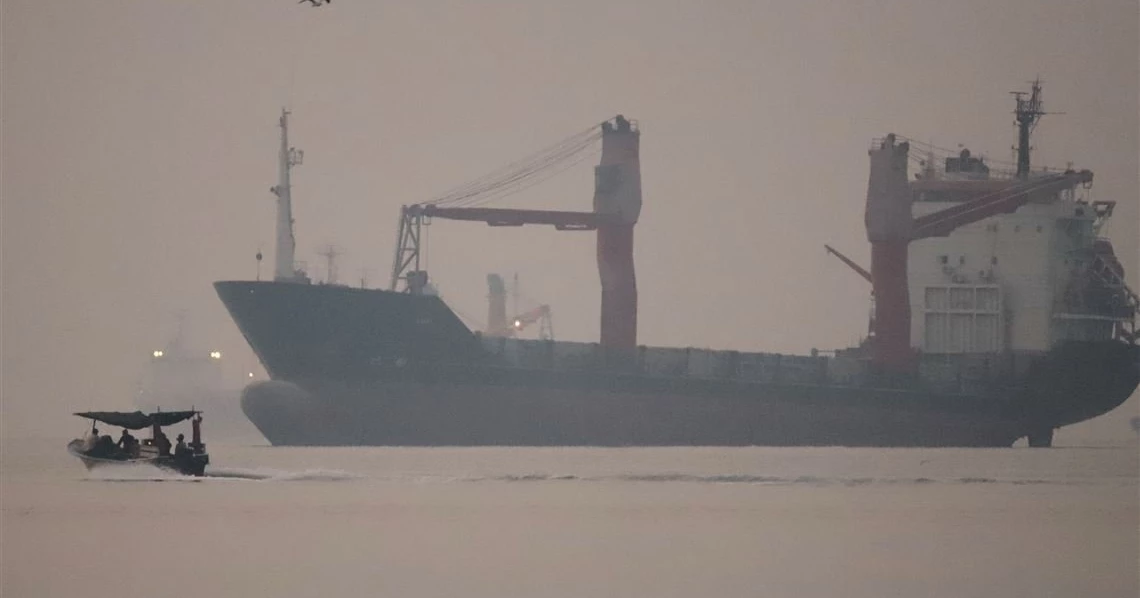
In Iran, Supreme Leader Ayatollah Mojtaba Khamenei praised Iranian forces for what he described as preventing “enemy forces” from freely operating in the Strait of Hormuz.
In a message broadcast Monday, Khamenei said Iran’s adversaries no longer approach the strategic waterway from closer than the Arabian Sea. He made the remarks marking the second anniversary of the killing of Hezbollah leader Hassan Nasrallah in Lebanon.
Khamenei has not appeared publicly since the initial attacks of the war on Feb. 28, which killed his father and predecessor, Ayatollah Ali Khamenei.
In Yemen, the Houthi-run Health Ministry said a strike by Saudi-backed forces on a residence in Taiz province killed three women and an elderly man and injured three others. The Associated Press could not independently verify the claim.
The World Health Organization said Sunday that it had recorded 164 deaths and 645 injuries in Yemen between Sept. 19 and Sept. 26. Since Aug. 6, the conflict has killed 838 people and injured 3,643 others, while more than 180,000 people have been displaced.
In Gaza, an Israeli strike on a rooftop in Gaza City killed a woman and injured her husband and another person, according to officials at Shifa Hospital. The Israeli military said it was aware of the strike and was investigating.
A separate Israeli strike on a school in the Nuseirat refugee camp later Monday critically injured one person, according to Al-Aqsa Martyrs Hospital. The Israeli military said it had targeted a “military operative” but gave no further details.
Gaza’s Health Ministry said more than 1,400 Palestinians have been killed since a ceasefire took effect nearly a year ago, with women and children accounting for about half of the deaths. International organizations regard the ministry’s records as generally reliable.
Meanwhile, Iran and the UAE renewed a dispute over the ownership of three Gulf islands — Abu Musa and the Greater and Lesser Tunb during the closing hours of the U.N. General Assembly.
The islands were seized by Iran in 1971 from territory that later became part of the UAE and are located near the Strait of Hormuz.
UAE Minister of State Khalifa Shaheen Al Marar accused Iran of occupying the islands in a speech earlier in the day. Later, Nasser Asadi of Iran’s U.N. mission rejected the criticism, saying Tehran maintains full sovereignty over the islands.