Historic Tangail auditorium left to decay as locals demand urgent renovation
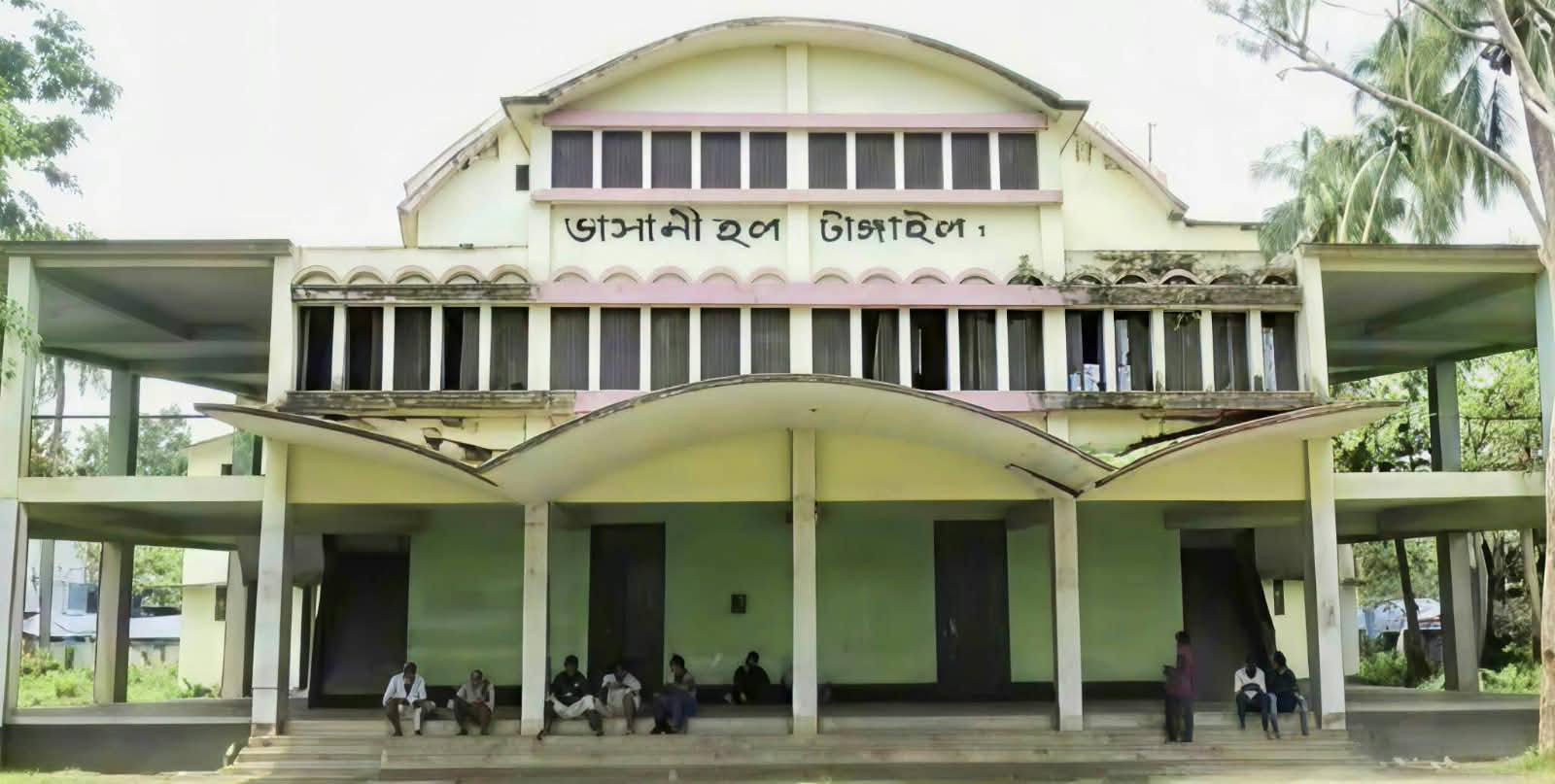
Shariful Alom, Tangail: Once the cultural heart of Tangail, the historic Bhashani Hall now stands as a grim symbol of official neglect, with cracked walls, peeling plaster and locked rooms turning the once-bustling auditorium into a derelict structure.
The nearly five-decade-old hall, which once hosted theatre, music, poetry recitals, book fairs and political gatherings, is now being used for purposes far removed from its original role.
During the day, a makeshift betel-leaf shop operates on its veranda, while the premises are used as a truck stand. After dusk, locals say, the area becomes a hangout for drug users and other antisocial elements, raising serious concerns about public safety.
Cultural activists and residents are demanding the immediate renovation or reconstruction of the landmark, saying its revival is essential to restoring Tangail’s cultural life and reclaiming the premises from criminal activities.
Built on around 35 decimals of land in the heart of Tangail town, the facility was originally known as Tangail Town Hall. Professor Abul Fazal, then education adviser to the president, laid its foundation stone on August 16, 1976.
Under the efforts of then Deputy Commissioner Sheikh Habibullah, construction was completed within two years. Built using indigenous technology, the auditorium was inaugurated on April 2, 1978, by Khane Alam Khan, then commissioner of the Dhaka Division.
It was later renamed Vashani Hall on the initiative of then Tangail Municipality chairman Shamsul Haque.
With around 1,000 seats, the auditorium became a major cultural venue in the district. Theatre groups from Dhaka and elsewhere regularly staged productions there, while local organisations held music programmes, poetry recitals, book fairs and cultural festivals.
But years of neglect and inadequate maintenance gradually turned the landmark into a ruin. About a decade ago, authorities declared it abandoned after the building became unsafe for use.
Large cracks have appeared in the walls, while plaster is falling from the ceiling and walls. Most of the rooms have remained locked for years and are now covered in dust.
An attempt to renovate the hall in 2015 also failed to produce any tangible results.
The closure has taken a heavy toll on Tangail’s cultural scene, activists say. Many cultural organisations have become inactive, while the town has no comparable modern auditorium capable of hosting large-scale programmes.
On June 12 this year, local MP and State Minister for Fisheries and Livestock Sultan Salauddin Tuku inspected the hall and instructed the Public Works Department to take steps to begin its comprehensive renovation as soon as possible.
Composer, lyricist and singer Firoz Ahmed Bachchu, who attended the hall’s inauguration, recalled its central role in Tangail’s cultural life.
“Bhashani Hall was the centre of our cultural activities,” he said, recalling how theatre groups, musicians and cultural activists regularly gathered there.
He said cultural organisations used to stage plays, concerts and other programmes during Eid, while a book fair was held on the premises every February.
“We can no longer organise large programmes like before,” Bachchu said, adding that organisers now have to use the Shilpakala Academy, which is located away from the town centre.
Poet Mahmud Kamal called for the hall to be renovated or reconstructed without further delay.
Tangail Club General Secretary Kamruzzaman Khan said restoring the hall was also important in the fight against drug abuse and teenage gang activity.
“If we want to keep young people away from drugs and teenage gangs, we must keep sports and cultural activities vibrant. For that, we need a proper auditorium,” he said.
Residents and cultural activists now want the authorities to turn promises into action before the historic Vashani Hall is lost forever.